
Spotlight on Dads

Dear Brothas...
A Father's Day & Men's Mental Health Month Letter from Blk Desert Doula:
Come here for a minute.
Sit down.
Unclench your jaw.
Drop your shoulders.
Take one deep breath that belongs only to you.
You've been carrying a lot.
Maybe more than you've told anybody.
The world has taught you to carry weight like it's your birthright. To grind. To provide. To protect. To endure. To swallow grief before it reaches your lips. To keep moving, even when your spirit is begging for rest.
Let me remind you of something your ancestors already knew.
Even the strongest tree needs rain.
You were never meant to survive on strength alone.
June holds Father's Day and Men's Mental Health Month, and I can't think of a better time to tell you something that isn't said nearly enough.
You deserve care, too.
As a birthworker and doula, I spend a lot of time talking about mothers, babies, and Black maternal health. Those conversations are necessary. We know Black women continue to face disproportionate challenges during pregnancy, birth, and postpartum.
But today...
I want to make room for you.
Because the man standing beside the birthing bed carries weight, too.
Whether you're holding her hand through contractions, assembling a crib after work, pacing hospital hallways, working overtime to provide, or silently wondering if you're doing enough...
I want you to hear this.
Your presence matters more than your perfection.
The Birth Room Sees You, Too.
I've watched Brothas become fathers in a single breath.
I've seen hands tremble while cutting umbilical cords.
I've seen tears quickly wiped away because somewhere along the line someone convinced you they weren't allowed.
I've heard the quiet question...
"Am I doing this right?"
The truth?
Most new parents are asking themselves the very same thing.
Your baby won't remember whether every blanket was folded perfectly.
They'll remember your heartbeat.
Your voice.
The safety they felt in your arms.
Being Her Safe Place
Pregnancy, birth, and postpartum stretch a woman's body, mind, and spirit in ways words rarely capture.
Sometimes your greatest act of love isn't solving the problem.
It's asking,
"Baby... what do you need today?"
Sometimes it's bringing her water before she asks.
Holding the baby while she showers.
Making dinner.
Scheduling the pediatric appointment.
Telling her she's still beautiful when she can't see it herself.
And sometimes, it's recognizing when something feels different.
Know the signs of postpartum depression and anxiety. Watch for persistent sadness, hopelessness, overwhelming anxiety, irritability, withdrawal from loved ones, difficulty sleeping even when the baby sleeps, feelings of worthlessness, or thoughts that life isn't worth living. If you notice these signs, encourage your partner to speak with her healthcare provider and remind her she doesn't have to carry them alone.
Love pays attention.
Now Let's Talk About You
Men experience postpartum depression and anxiety, too.
Fatherhood changes your nervous system just as it changes your life.
Sometimes your struggle doesn't look like sadness.
Sometimes it looks like anger.
Like working all the time.
Like shutting down.
Like feeling disconnected.
Like believing everyone else deserves care before you do.
If that's been your story...
You are not weak.
You are not broken.
You are not failing.
You are human.
And you deserve support.

Build Your Village
Who checks on you?
Who asks if you've eaten?
Who notices when you've gone quiet?
Who reminds you that you don't have to carry everything by yourself?
If you don't have that person yet...
Build your village.
Call another Brotha.
Talk with an elder.
Find a therapist.
Join a fathers' group.
Go fishing.
Lift weights.
Pray.
Dance while you're grilling.
Sit by the water.
Play cards and dominoes with your boys.
Laugh until your stomach hurts.
Rest.
Whatever reminds your body that it is safe to exhale...
Do more of that.

Your Healing Is Part of Your Legacy
One of the greatest lessons I've learned through birthworking is this:
A regulated nervous system creates safer spaces.
A father who feels supported is more able to support.
A man who learns to heal gives his children permission to do the same.
A regulated father changes a household. A healed Brotha changes a bloodline.
That is legacy.
Not perfection.
Not pretending.
Not carrying everything alone.
Legacy is teaching your children that strength and tenderness belong together.
That courage includes asking for help.
That love is something we practice every day.
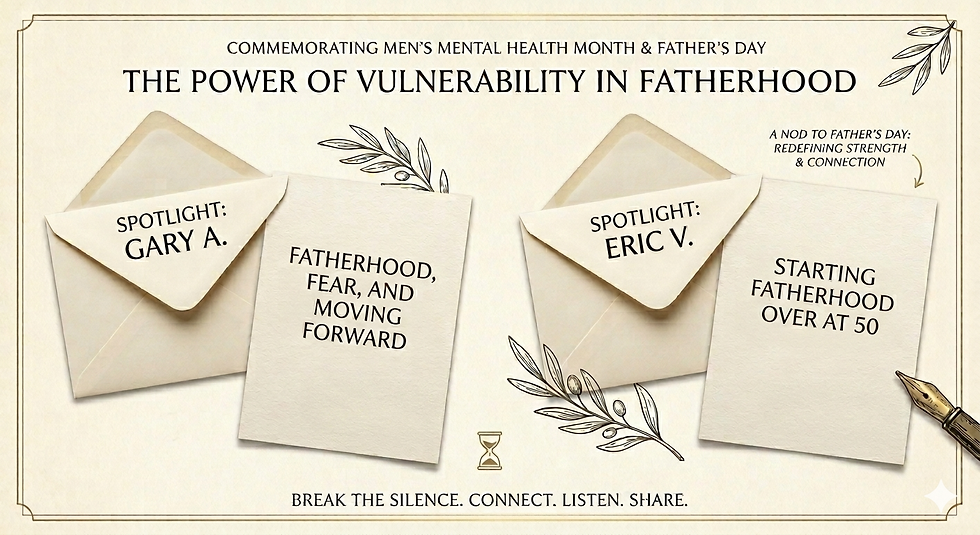
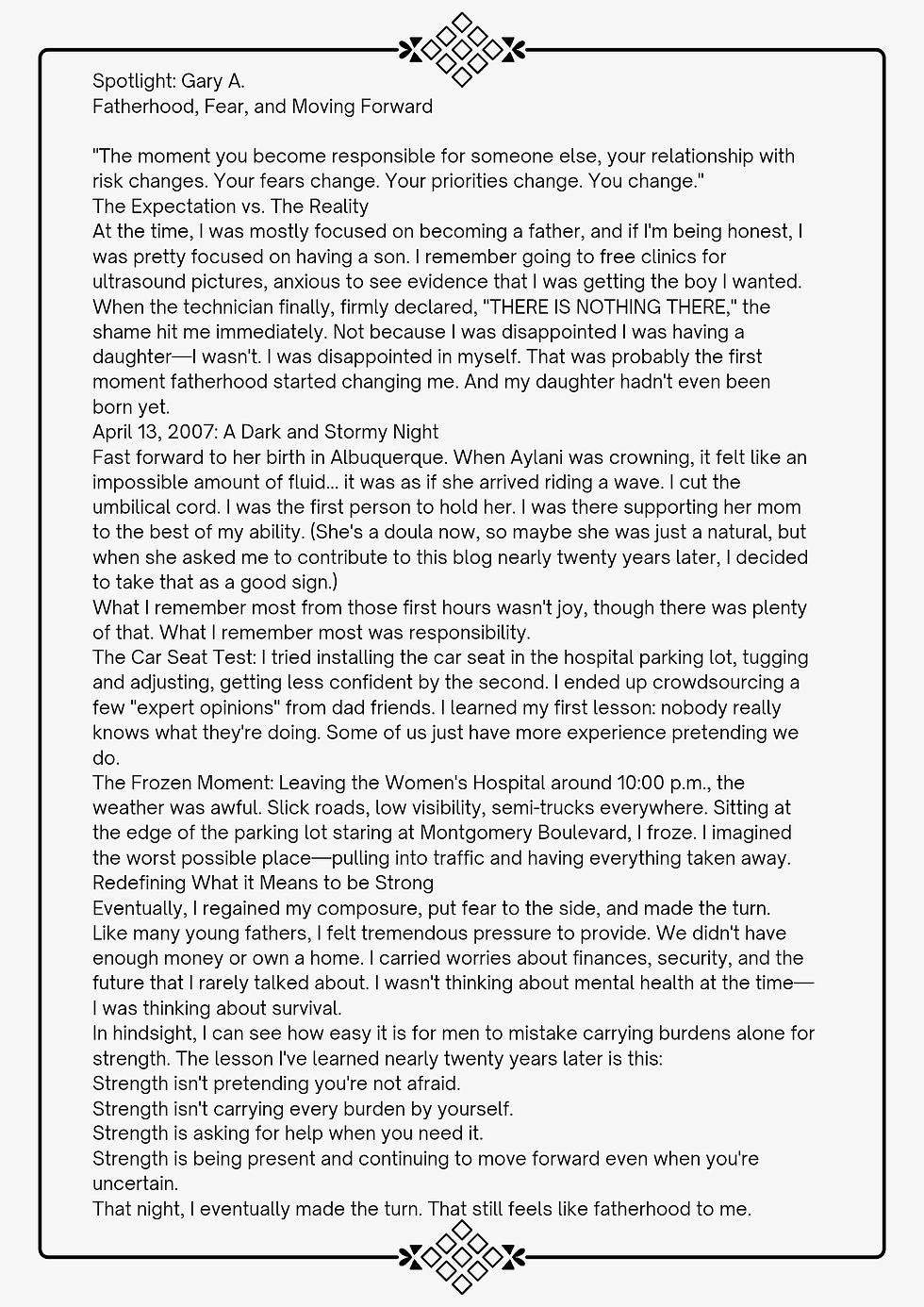
Today, we're sharing the stories of a couple of fathers to encourage fathers and partners who may be wondering "am I doing this right?" A reminder that y'all aren't alone!


Comments